Greensboro Hearing Loss Attorney
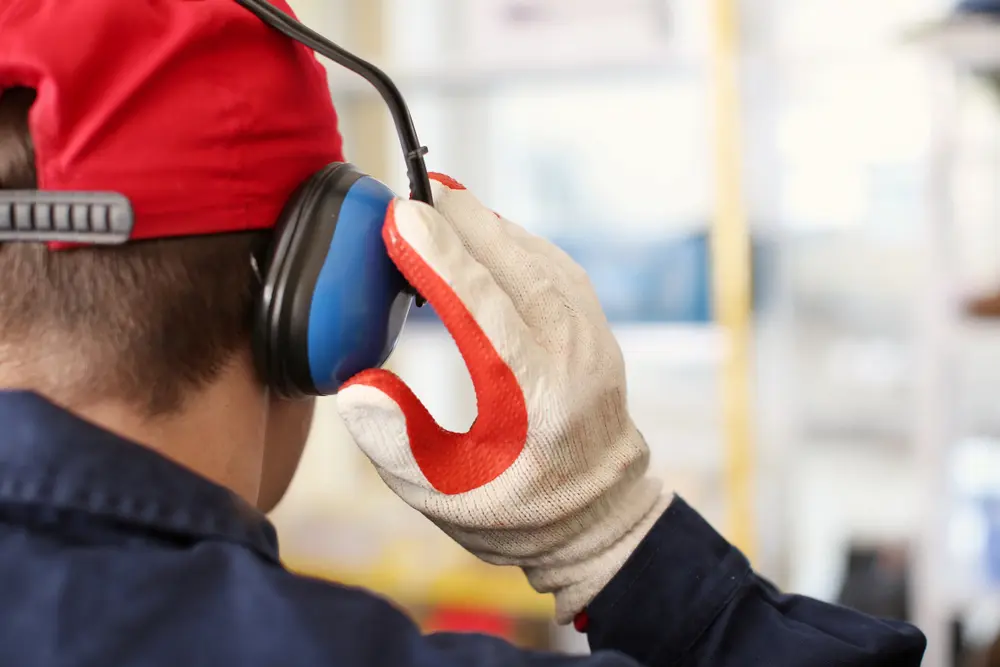
Workplaces can expose their workers to various risks, including occupational hearing loss. According to the CDC, hearing loss increases when people are exposed to loud sounds over time. Aside from not being able to hear well, hearing loss can also contribute to stress, heart disease, high blood pressure, and more.
Don’t wait to contact an attorney if you have significant hearing loss because you work in a noisy environment. At Ward Black Law, we help injured people in North Carolina pursue the maximum benefits they deserve for the traumatic hearing loss they’ve suffered due to hazardous noise levels on the job.
Contact us today for a free workers’ compensation case review with an attorney at our law firm.
Work-related hearing loss is an occupational disability in North Carolina, and you can seek compensation to cover related costs. To receive these benefits, you must prove your permanent hearing loss by getting an audiogram. You must also prove this loss was caused by exposure to loud noise in the workplace. This can be an extensive, time-consuming process requiring documentation. If you’re already dealing with the consequences of occupational hearing loss, proving your hearing loss claim is another stressor.
Our workers’ compensation lawyers have experience dealing with job-related hearing loss claims. Our lawyers can help you:
There are a few root causes of work-related hearing loss. Recognizing the sources of these hazards can increase your preparedness. They include:
According to the Centers for Disease Control and Prevention, a few other factors influence hearing loss and its severity. These factors include:
Hearing loss may develop slowly over long-term exposure, making it difficult to pinpoint precisely when hearing worsens.
See a doctor for a hearing test and medical care if you are experiencing one or more of these symptoms for long periods, as they can indicate potentially permanent hearing loss. Hearing aids or other devices might be necessary if you have suffered hearing loss that impairs your ability to work and handle tasks of daily living. Medicare doesn’t cover hearing aids, but you can purchase them over-the-counter.
According to the U.S. Bureau of Labor Statistics, over 50,000 Greensboro-High Point employees worked in manufacturing, and roughly 17,000 worked in mining, logging, or construction. With thousands of Greensboro workers employed in high-risk industries for occupational hearing loss, the potential for hearing loss is significant.
However, hearing loss is not limited to high-risk jobs like manufacturing and construction. Workers in many other occupational settings can also experience conditions that lead to work-related hearing loss.
While numerous jobs expose workers to hazardous workplace noise, some occupations encounter it frequently, which can result in long-term health issues. Employers must mitigate hearing loss risks by providing personal protective equipment (PPE) and working to reduce or eliminate overall sound levels over a 90-decibel level average during an eight-hour workday.
Workers at high risk for hearing loss include:
You could be eligible for workers’ compensation benefits for permanent hearing loss that resulted from exposure to noise in your work environment. You can receive compensation for hearing loss in both ears, according to the Workers’ Compensation Act.
Under the terms of the occupational disease section of the Act, you could be entitled to compensation if:
A formula will be used to calculate the percentage of your hearing loss. For complete hearing loss in both ears, an injured worker can receive 150 weeks of compensation at their average weekly wage, computed on the prior 52 weeks’ wages.
Except for the preexisting loss of hearing due to disease or congenital defect, you can only recover if the loss of hearing occurs in both ears.
To be entitled to benefits, an employee must be exposed to workplace noise exceeding 90 decibels for at least 90 working days, or parts thereof.
No. As long as your loss of hearing occurred in both ears, the level of hearing does not have to be the same level of loss (i.e. a person with a 25% loss of hearing in the right ear and a 40% loss in the left may still be able to recover benefits if the loss is due to loud noise at work).
No, the loss of hearing must be permanent.
The employer liable for benefits is the one in whose employment you were last exposed to 90 decibels over 90 working days.
Benefits are determined by using a complicated formula, which averages your hearing loss in each ear for the frequencies of 500, 1000, 2,000, and 3,000 cycles per second.
No, the provision of hearing protection (i.e. earplugs) and/or a requirement that you wear hearing protection does not bar you from filing a claim for occupational hearing loss.
You can only file a claim when you have been removed from the workplace noise. When your employer provides and enforces the use of hearing protection, you are considered to have been removed from the harmful noise.
If you’re experiencing job-related hearing loss, you need legal help. The skilled hearing loss attorneys at Ward Black Law want to help you. We have recovered millions of dollars in compensation for workers hurt on the job.
Contact Ward Black Law today for a free case review. The sooner you call, the sooner we can help.